They Opened Duolingo for a Story and Never Looked Back
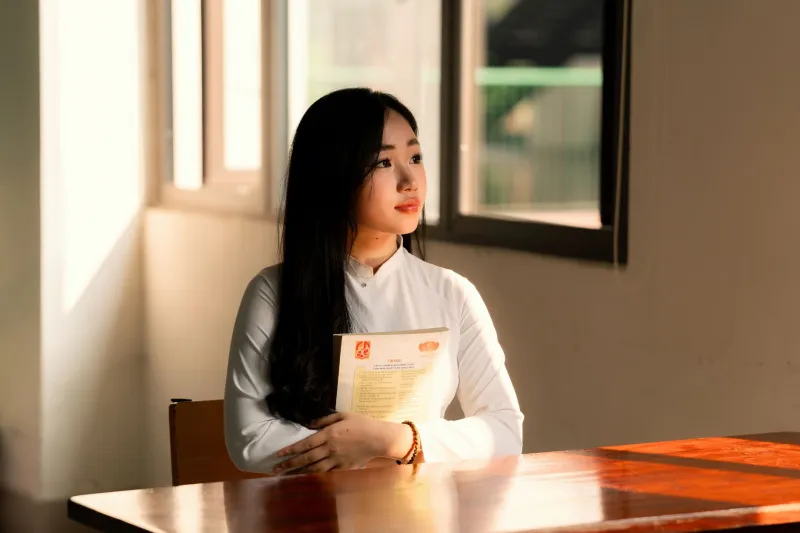
Somewhere between chapter 47 and chapter 48 of a slow-burn historical romance she'd been following for months, Mia — a 22-year-old college student from Austin, Texas — hit a wall. The fan translation had stalled. The official English release was still listed as "coming soon." And the Vietnamese source chapters were sitting right there, fully published, completely readable — if only she knew the language.
So she downloaded an app. Then she found a YouTube playlist. Then she joined a Discord server called "Học Tiếng Việt for Fiction Fans." Three months later, she was reading the raws.
"I never thought I'd be the kind of person who learns a language for a book," she told us, laughing. "But here I am."
She's not alone. Not even close.
The Translation Gap That Started a Movement
Anyone who's followed Vietnamese web fiction in the US knows the rhythm: a story blows up in online reading communities, fan translators race to keep pace, and then — inevitably — the updates slow down or stop entirely. Official licensing deals take time. Professional translation pipelines are long. And meanwhile, the original Vietnamese chapters keep dropping, sometimes daily.
For a certain type of reader, that gap is unbearable. These are people who've already built their lives around serialized fiction — who understand cliffhangers as a form of emotional warfare and treat chapter release days like minor holidays. Waiting weeks or months for a translation when the source material exists feels, to them, genuinely absurd.
So some of them stopped waiting.
Data from language-learning platforms tells an interesting story. Vietnamese has quietly climbed the ranks of "surprise growth" languages among English-speaking users in the US over the past two years, particularly in the 18–28 demographic. While official reasons vary, community forums and Reddit threads tell a more specific story: fiction. Specifically, Vietnamese web novels and manhwa-adjacent comics with devoted online fandoms.
"I checked my app streak the other day," said Jordan, a 25-year-old from Portland who's been studying Vietnamese for about eight months. "It's longer than any language I've ever tried before. And the only reason I've kept going is because I want to read Thiên Mệnh Kỳ Duyên without waiting for someone else to translate it for me."
What Stories Are Worth the Effort?
Not every piece of fiction inspires someone to learn a new language. The stories that do tend to share a few things in common: they're serialized (meaning there's always more coming), they have emotionally invested online communities, and they offer something that feels genuinely untranslatable — a texture, a humor, a cultural specificity that even the best English versions can't fully capture.
Historical romances set in Vietnamese imperial courts are a recurring favorite. So are reincarnation fantasy novels with morally complex female leads — a genre that's had a massive moment in East and Southeast Asian web fiction but hasn't quite found its footing in Western publishing. Readers describe these stories as filling a gap that English-language fiction simply hasn't addressed.
"There's a kind of female protagonist in Vietnamese web fiction that I don't see anywhere else," said Priya, a 20-year-old from Chicago who started learning Vietnamese after falling deep into a transmigration novel last year. "She's strategic. She's patient. She's not defined by a love interest even when there is one. I wanted more of that, and the translation queue wasn't moving fast enough."
For Priya, the language learning became something bigger than a workaround. She's now two semesters into a formal Vietnamese language course at her university. Her original motivation was fiction. Her current motivation is something closer to genuine fascination.
The Accidental Cultural Immersion
Here's the part nobody fully anticipated: readers who start learning Vietnamese for fiction don't stay in the fiction. They end up in the culture.
Vocabulary learned through historical novels leads to curiosity about actual Vietnamese history. Idioms picked up in romantic dramas prompt questions about regional dialects. Food mentioned in passing in a serialized story becomes something to research, then something to cook, then something to seek out at a Vietnamese restaurant in their city.
Several readers we spoke to described a kind of domino effect — one story pulling them through a door they didn't know was there. Discord servers that started as translation-support spaces have evolved into broader cultural exchange communities, where Vietnamese-speaking members help American learners with pronunciation while American readers share which stories resonated most with international audiences.
"It's genuinely one of the most wholesome corners of the internet I've ever been in," said Marcus, a 27-year-old from Atlanta who moderates one such server. "People come in because they're obsessed with a story. They stay because they're starting to actually understand the world the story comes from."
What This Means for the Bigger Picture
For a platform like Nhà Truyện, this phenomenon is worth paying attention to — not just as a feel-good story, but as a signal about where the audience is heading.
The traditional model assumed a clear divide: Vietnamese-speaking readers on one side, English-speaking readers waiting for translations on the other. What's emerging instead is a third category — readers who exist in between, who are actively building their own linguistic access, who are motivated by love of story in a way that formal education rarely achieves.
Language educators have started to notice. A few have begun experimenting with web fiction as a teaching tool, using serialized chapters the way language classes once used newspapers — as real, living text that students actually want to engage with. The motivation problem, which has always been the hardest part of language acquisition, is apparently a lot more solvable when the stakes are finding out whether your favorite characters finally get together.
There's also something quietly profound happening at the cultural level. Vietnamese web fiction is becoming, for a generation of American readers, a first point of genuine contact with Vietnamese language and culture — not through a history class, not through a news story, but through a story someone cared enough about to stay up until 3 a.m. reading.
That's not nothing. That's actually kind of everything.
The Story Doesn't End Here
Mia, back in Austin, finished the arc that started her whole Vietnamese-learning journey a few weeks ago. She read the final chapters in the original — slowly, with a dictionary tab open, backtracking more than she'd like to admit — but she read them.
"It felt different," she said. "Like I'd actually earned the ending."
She's already started the next series. She's not waiting for a translation this time.