Slow Mornings and Paper Letters: Why Gen Z Can't Stop Reading Vietnamese Historical Fiction
The Slowness Is the Point
Imagine a story where the characters wait weeks for a letter. Where misunderstandings last months because there's no way to send a quick correction. Where love is communicated through the careful selection of a gift rather than a text message at 2 a.m.
This is the texture of a lot of Vietnamese historical web fiction — and American Gen Z readers are absolutely hooked on it.
On the surface, this doesn't make a lot of sense. These are readers who grew up with infinite scroll, same-day delivery, and the expectation that any question can be answered in under four seconds. Why would they seek out stories built around slowness, distance, and the ache of waiting?
The answer, it turns out, says a lot about what's missing from the entertainment landscape they actually live in.
A Different Flavor of Nostalgia
American period pieces have their own nostalgia economy. Stranger Things mines the 1980s. Daisy Jones & The Six reconstructs the 1970s rock scene. Countless prestige dramas revisit mid-century America with varying degrees of critical distance. These stories work because they trigger shared cultural memory — the aesthetics, the references, the vibe of an era that's either personally remembered or culturally inherited.
Vietnamese historical fiction offers something structurally different. For most American Gen Z readers, there is no personal or inherited connection to the Nguyễn dynasty, to the French colonial period, or to the village life of rural Vietnam in the early twentieth century. The nostalgia these stories produce isn't recognition. It's something closer to longing for a world the reader never had access to in the first place.
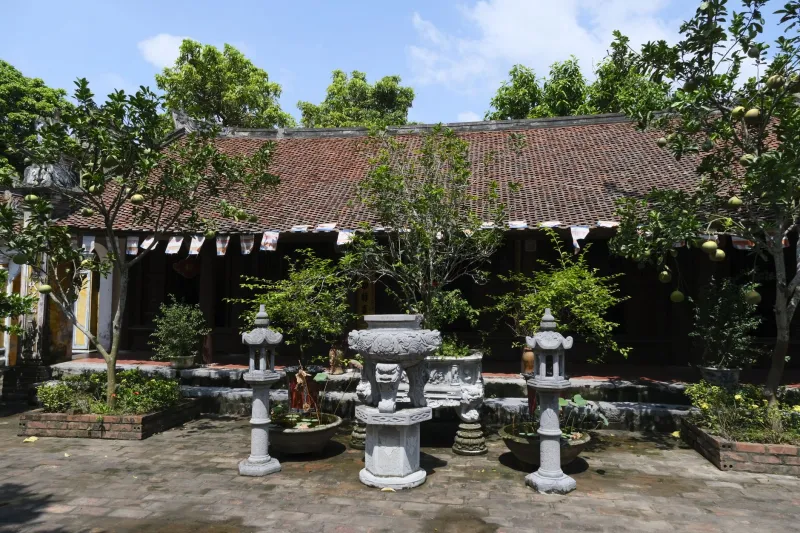
That distinction matters. Psychologists sometimes call this "nostalgic anticipation" — a wistful pull toward an imagined past rather than a remembered one. It's the feeling you get from a beautifully described place you've never been. And Vietnamese historical fiction, with its specific sensory details — the smell of rain on stone courtyards, the weight of silk, the particular silence of a house before dawn — delivers that feeling in concentrated doses.
Sophia, a 20-year-old college student in Austin who discovered Vietnamese historical romance through a translated excerpt on Tumblr, describes the effect precisely: "It doesn't feel like escapism in the way that, like, a fantasy novel does. It feels more real than that. The emotions are really human. But the world is so far from mine that it gives me room to breathe."
The Aesthetic That Took Over Their Feeds First
It's worth noting that this literary appetite didn't emerge in a vacuum. It was preceded — and probably enabled — by the massive spread of Vietnamese and broader East Asian historical aesthetics through platforms like Pinterest, TikTok, and Instagram.
The "cottagecore" and "dark academia" aesthetics that dominated Gen Z visual culture in the early 2020s share a family resemblance with the imagery that saturates Vietnamese historical fiction: candlelight, handmade objects, gardens, ink and paper, clothing with weight and intention. When readers already have a visual vocabulary for this world, stepping into a story set inside it feels natural.
Vietnamese web fiction writers have been feeding this appetite with remarkable sophistication. Authors like those serializing on Nhà Truyện understand that their American diaspora and international readers are often coming with aesthetic fluency but historical gaps — and they write accordingly, embedding cultural context into the narrative without making it feel like a lecture.
What the Hyperconnected World Actually Costs
There's a critique embedded in the appeal of these stories, even if readers don't consciously articulate it. The worlds depicted in Vietnamese historical fiction are worlds where attention is finite and therefore precious. A conversation happens once, in person, and matters because it can't be replicated or scrolled back to. A relationship develops slowly because there's no alternative.
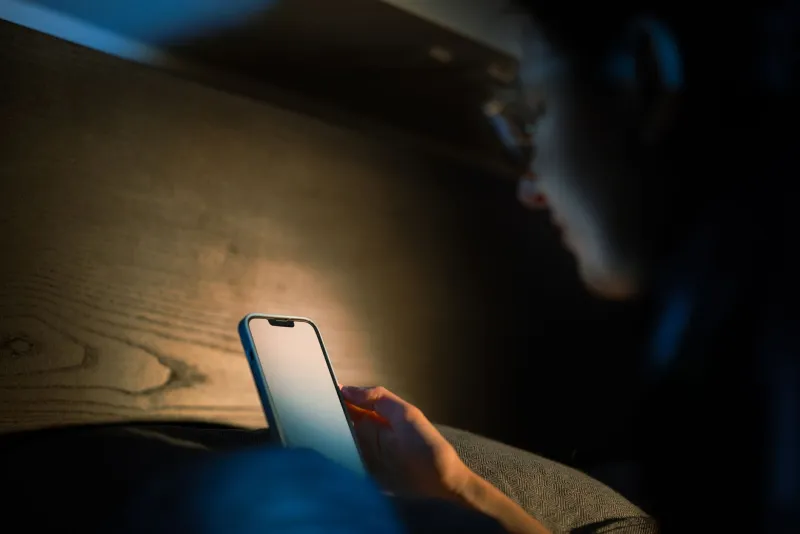
For Gen Z readers managing the cognitive load of constant connectivity — the notifications, the content queues, the ambient anxiety of always being reachable — this represents something they don't have a clean word for but feel acutely: relief.
James, a 24-year-old graphic designer in Brooklyn, started reading Vietnamese historical serials during a period when he was trying to cut back on doomscrolling. "I needed something that would hold my attention without making me feel worse afterward," he says. "These stories are slow in a way that feels intentional. The pacing itself is kind of therapeutic."
This observation points to something that American entertainment, even its most thoughtful period pieces, often fails to deliver: a genuine alternative rhythm. Most American nostalgia content is still packaged for modern consumption — rapid editing, compressed timelines, streaming-optimized pacing. Vietnamese historical web fiction, by contrast, often leans into its own slowness as a feature.
Cultural Specificity as the Selling Point
One of the counterintuitive things about the appeal of Vietnamese historical fiction for American readers is that its foreignness isn't an obstacle — it's the attraction. The cultural specificity that might seem like a barrier to entry is precisely what makes these stories feel like genuine escape rather than rebranded familiarity.
American Gen Z has grown up in a media environment saturated with content optimized for the broadest possible audience. Everything is sanded smooth. The edges are removed. Vietnamese historical fiction, by contrast, has edges — specific customs, specific social codes, specific moral frameworks that don't map neatly onto contemporary American values. Navigating that unfamiliarity is part of the pleasure.
It's the same reason readers travel. Not to find what they already know, but to encounter something that reframes what they thought they understood.
Nhà Truyện exists, in part, because these stories deserve readers who will meet them on their own terms. And increasingly, those readers are showing up — from Austin and Brooklyn and Portland — hungry for worlds that don't look anything like the one they already live in.