Outside the Binary: How Vietnamese Webcomics Are Giving American Gen Z Characters They've Never Seen Before
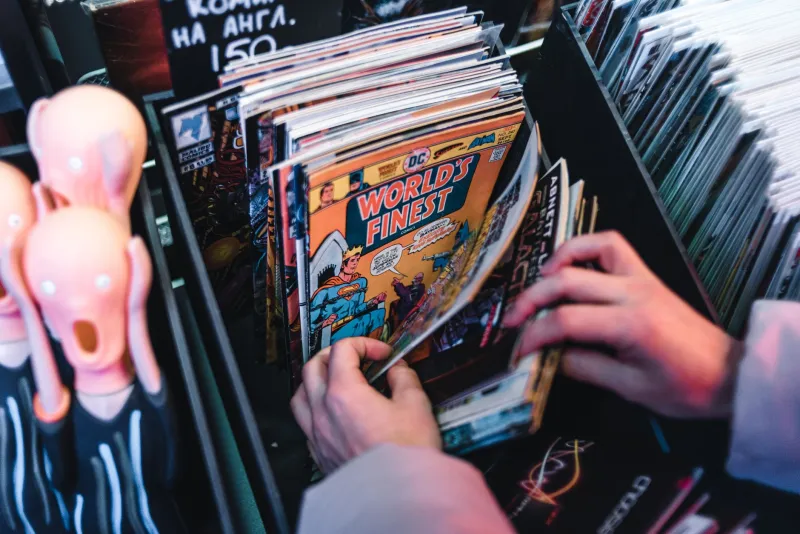
Open up a popular Vietnamese webcomic on your phone — the kind that's been quietly racking up English-language readers through fan translation communities on Tumblr and Discord — and you'll notice something almost immediately. The characters don't announce themselves. They don't have coming-out arcs structured like after-school specials. A character might present androgynously, love someone of the same gender, and exist in a found family that doesn't map onto any Western sitcom template — and the story just... keeps going. No dramatic pause. No Very Special Episode energy.
For a generation of American readers who grew up watching representation get handled like a liability, this is quietly revolutionary.
The Representation Fatigue Nobody's Talking About
American Gen Z has, in theory, more LGBTQ+ and diverse representation in mainstream media than any previous generation. In practice, a lot of that representation follows a recognizable formula: the narrative centers the identity, the story arc resolves around acceptance, and the character exists primarily to demonstrate that the writers Did The Work.
It's not nothing. But it's also not the same as a character who simply is — whose gender expression or family structure is part of the texture of the story rather than the thesis statement.
Vietnamese webcomics, particularly the ones gaining traction among diaspora communities and non-Vietnamese American readers, have a different relationship with this kind of complexity. Partly because they're operating within a different cultural framework, and partly because Vietnamese digital comics have a long tradition of blending genres — romance, fantasy, slice-of-life, historical drama — in ways that don't leave much room for the kind of didactic storytelling that dominates American YA and mainstream comics.
What Vietnamese Creators Are Actually Doing
Take the genre of BL (boys' love) and GL (girls' love) webcomics originating from Vietnam and neighboring Southeast Asian creative communities. These aren't niche products — they have massive readerships, and they've developed visual and narrative languages for gender and desire that look genuinely different from their Western counterparts.
Vietnamese BL webcomics in particular often feature male characters with fluid, aesthetically androgynous presentations that exist without the story needing to explain or justify them. The visual grammar of Vietnamese manhwa-influenced art — softer linework, expressive eyes, fashion-forward character design — creates space for gender ambiguity that American superhero comics or even indie graphic novels rarely achieve.
More interestingly, the found family structures in these comics tend to be built from genuine social outsiderism rather than idealized chosen-family narratives. Characters bond because they're all, in various ways, people who don't fit — not because the story has designated them as a supportive ensemble. The messiness of those relationships, the loyalty that coexists with conflict, reads as more emotionally honest to a lot of American Gen Z readers than the tidier versions they're used to.
"It doesn't feel like the author is trying to teach me something," one American reader active in a Vietnamese webcomic fan community put it. "It just feels like people."
The Cultural Gap That Isn't What You Think
It would be easy to assume that Vietnamese webcomics represent some kind of more progressive social landscape — that Vietnam has figured out representation in ways the US hasn't. That's not quite the picture. Vietnam has its own complex, often conservative social norms around gender and family, and many Vietnamese creators working with queer themes are doing so within or against those constraints, not from a place of uncomplicated cultural acceptance.
What that tension produces, interestingly, is storytelling that treats complexity as a given rather than a destination. Characters navigate social pressures that are real and specific rather than abstracted into generic bigotry. The families in these stories are complicated in culturally particular ways — the weight of expectation, the specific texture of Vietnamese filial relationships, the way love and obligation tangle together — and that specificity translates into emotional texture that American readers respond to even when they don't share the cultural reference points.
Specificity, it turns out, travels better than universality.
Why Western Publishers Missed This
American comics publishers and YA imprints have spent years chasing diversity metrics. They've added characters, revised backstories, hired sensitivity readers. What many of them haven't done is fundamentally rethink the narrative architecture around those characters — the way representation gets framed, paced, and resolved.
Vietnamese webcomic creators, working in a digital-native format with direct reader feedback and no gatekeeping from traditional publishing infrastructure, evolved differently. They built audiences through emotional resonance first. The representation followed from the characters, not the other way around.
For Asian Gen Z readers in the US — many of whom grew up seeing their own families' complexity flattened into model-minority tropes or Tiger Mom caricatures — Vietnamese webcomics offer something rare: stories where Asian characters are the default, not the exception, and where their gender, family dynamics, and social lives get to be complicated on their own terms.
The Nhà Truyện Effect
Platforms dedicated to Vietnamese-language and Vietnamese-origin storytelling are, whether intentionally or not, preserving something that mainstream American media keeps accidentally destroying: the idea that a story can hold contradictions without resolving them, that a character can be outside every category and still be completely legible, that representation doesn't have to announce itself to matter.
Gen Z found this. They found it in fan translation threads and recommendation lists and late-night Discord servers. They found it in comics that weren't made for them — and claimed them anyway.
That's not a trend. That's a hunger that wasn't being fed anywhere else.